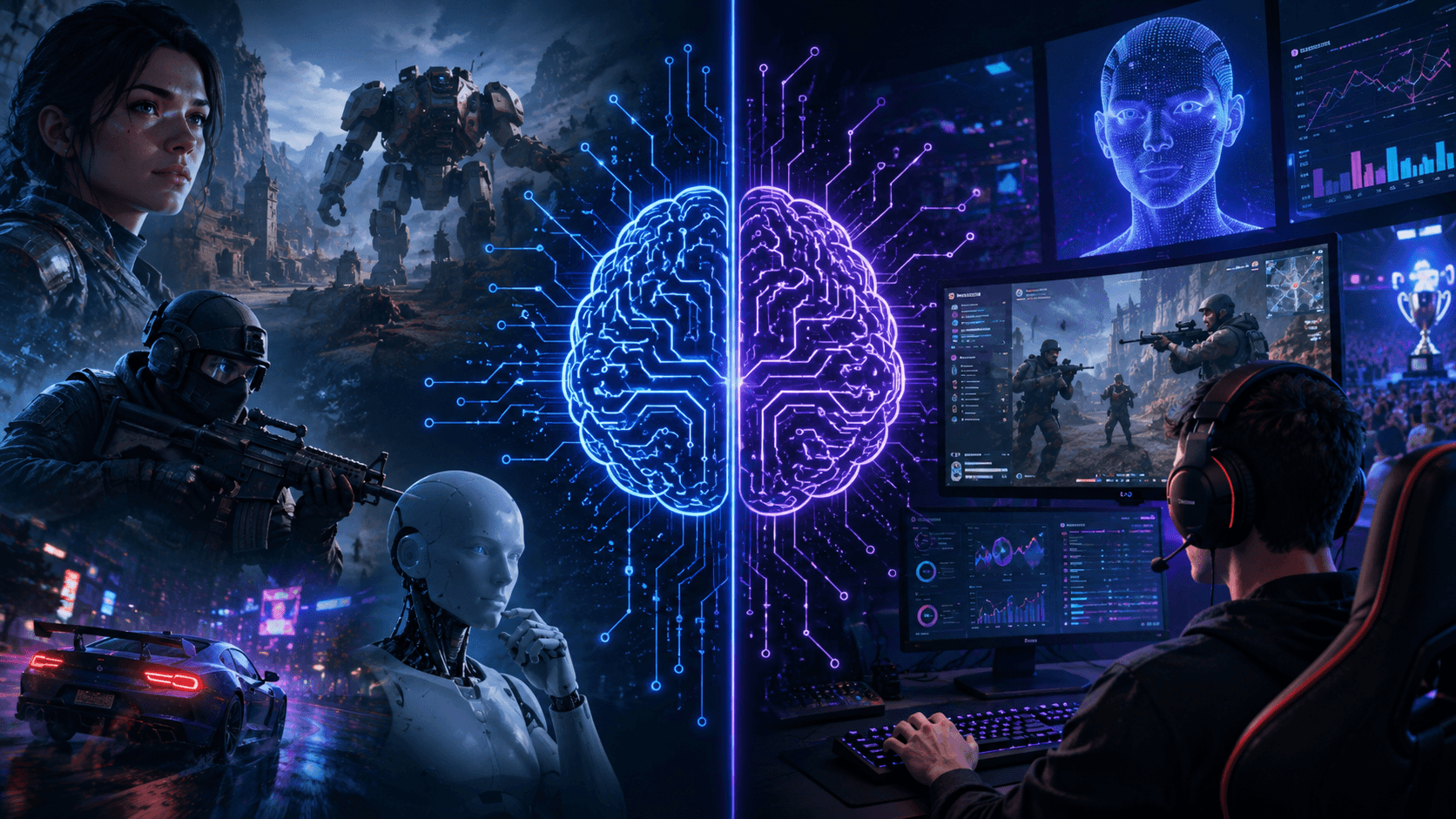
AI Is Becoming Gaming’s Biggest Debate
Artificial intelligence continues to dominate conversations across the gaming industry in 2026, and this week brought even more discussion after major gaming executives doubled down on AI’s future role in game development.
While publishers believe AI could dramatically accelerate production pipelines and improve personalization, many players remain skeptical about how far the technology should go.
Gaming Companies Continue Investing in AI
Several major publishers recently discussed how AI may help improve:
Character animation
NPC behaviors
Quality assurance testing
Game recommendations
Content generation
Voice systems
Executives argue that AI tools can help studios develop games faster while allowing developers to focus more heavily on creativity and design.
Sony leadership specifically highlighted how AI may assist with animation workflows, facial modeling, and backend platform systems in the future.
At the same time, Xbox recently scaled back some of its public AI gaming ambitions after criticism surrounding Copilot integration.
Players Still Have Concerns
Despite the excitement from publishers, many players remain cautious about how AI could impact gaming.
Some of the biggest concerns include:
Reduced creativity
Loss of developer jobs
Generic content generation
Privacy concerns
Over-reliance on automation
Gamers have increasingly pushed back against features that feel unnecessary or disconnected from actual gameplay improvements.
Many players continue emphasizing that strong gameplay, competitive balance, performance optimization, and content quality matter far more than AI marketing buzzwords.
Competitive Gaming Could Change
AI may still significantly affect esports and competitive gaming in the coming years.
Potential future uses include:
Advanced anti-cheat systems
Real-time coaching tools
Match analysis
Personalized training systems
Smarter spectator experiences
Competitive communities for games like Counter-Strike 2, Street Fighter 6, and Call of Duty continue evolving rapidly as publishers look for ways to improve both player retention and viewer engagement.
However, most players still want AI to remain in the background rather than becoming the centerpiece of the experience.
The Industry Is Searching for Balance
The biggest challenge for gaming companies now is finding the right balance between innovation and player trust.
Players generally support technology that:
Improves performance
Enhances accessibility
Reduces cheating
Speeds up matchmaking
Creates smoother gameplay experiences
But audiences quickly become skeptical when AI feels forced into games without meaningful value.
That balance may define the next phase of gaming innovation.
Final Thoughts
AI is clearly becoming one of the gaming industry’s biggest long-term focuses, but companies still need to prove how the technology actually improves player experiences.
The future likely won’t be about replacing developers or changing games entirely. Instead, the most successful use of AI may simply help create smoother, more responsive, and more competitive gaming experiences behind the scenes.
How publishers handle that transition could shape gaming for the next decade.
Explore more gaming industry news and updates on the 1v1Me blog
Author:
Jordan Kline
Jordan covers esports culture, gaming news, and how competitive scenes evolve across titles. He writes breakdowns that bridge mainstream gaming trends with the creator-driven world of 1v1Me.

15,000+ Ratings
