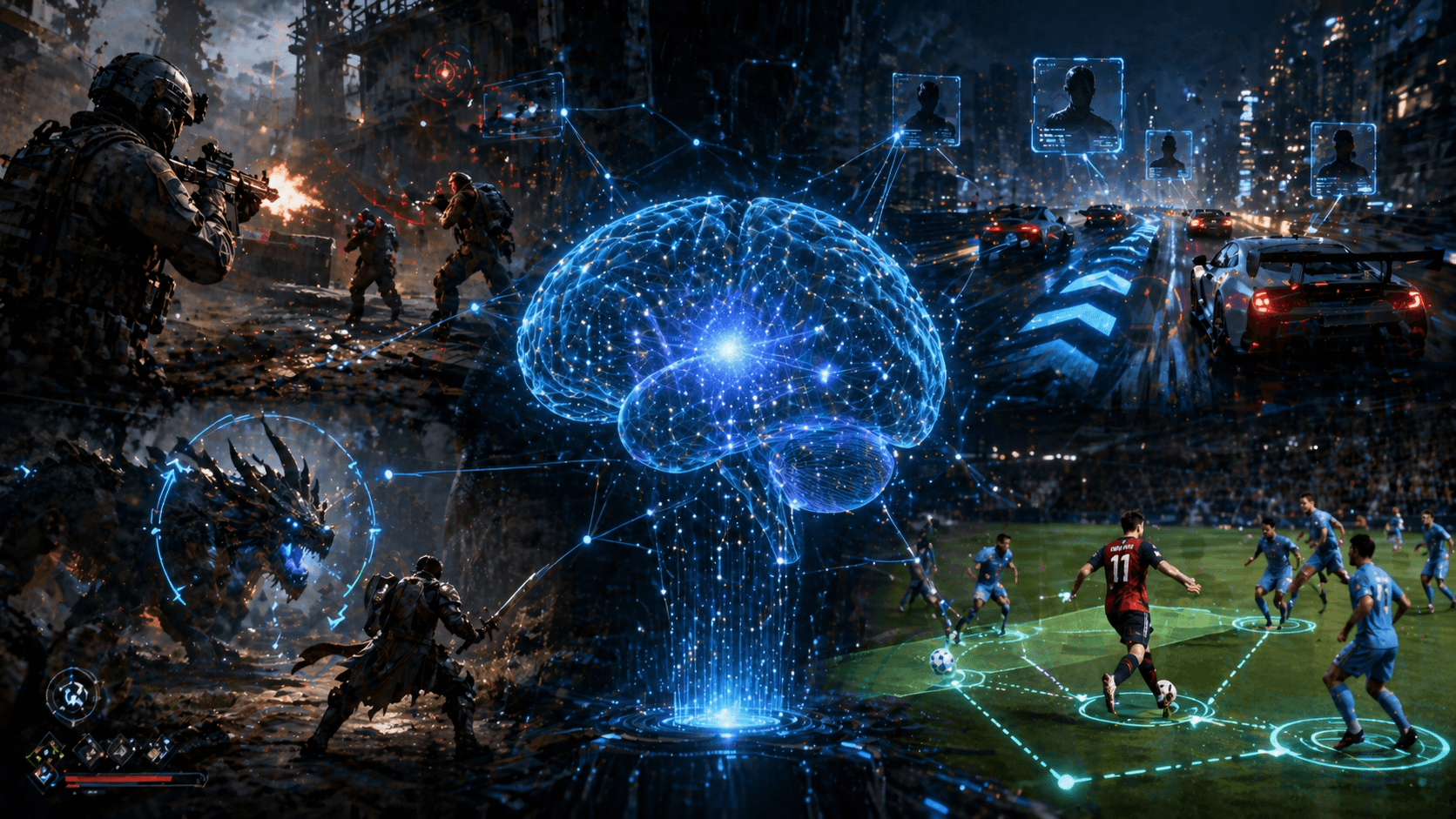
AI-Driven Opponents Are Transforming Game Difficulty
Artificial intelligence is becoming one of the most impactful forces in gaming in 2026. Developers are now leveraging advanced AI systems to create opponents that learn, adapt, and respond dynamically to player behavior.
Gameplay Improvements
AI-driven systems are elevating gameplay in several key ways:
Opponents that adapt to player strategies in real time
Smarter decision-making that mimics human-like behavior
Dynamic difficulty scaling based on player performance
More realistic team coordination in sports and shooter titles
Reduced predictability compared to traditional scripted AI
These advancements are making games feel more alive, with opponents that react rather than simply follow pre-programmed patterns.
A Shift Toward Realism and Challenge
Traditional AI has often been predictable, relying on fixed patterns that players could eventually exploit. The new wave of AI changes that completely, forcing players to constantly adjust their approach.
This creates a more authentic experience, especially in competitive-style games where reading and reacting to opponents is key.
Impact on Competitive Play
While AI is not replacing human competition, it is playing a larger role in training and practice environments. Players can now simulate high-level competition against AI opponents that behave more like real players.
This helps bridge the gap for newer players while also giving experienced players a way to refine their skills without relying solely on matchmaking.
Final Thoughts
AI-driven opponents are pushing gaming into a new era of realism and challenge. As these systems continue to evolve, players can expect more engaging, unpredictable, and skill-driven experiences across all genres.
Author:
Jordan Kline
Jordan covers esports culture, gaming news, and how competitive scenes evolve across titles. He writes breakdowns that bridge mainstream gaming trends with the creator-driven world of 1v1Me.

15,000+ Ratings
