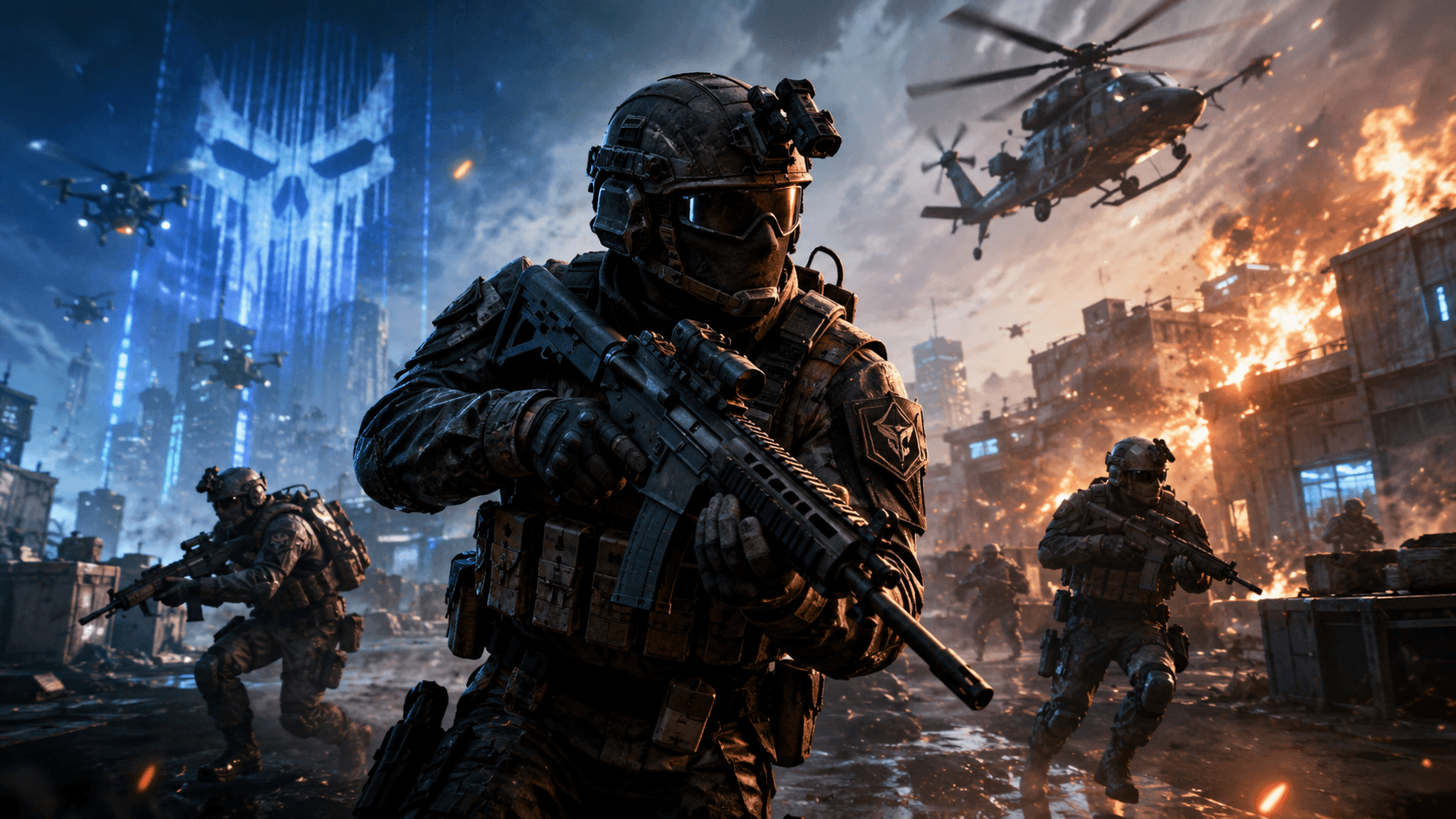
Black Ops 7 Leaves Last-Gen Consoles Behind
Call of Duty is officially entering a new era.
After years of supporting older hardware, Activision has now confirmed that future Call of Duty titles following Black Ops 7 will no longer support PlayStation 4 or Xbox One. The move signals a major transition for the franchise and gives developers more freedom to fully utilize modern console technology.
For years, Call of Duty maintained cross-generation support to maximize player accessibility. However, many players felt recent releases were being held back technically by the need to support older systems.
Now, with the franchise finally shifting completely toward current-gen platforms, expectations for future gameplay improvements have skyrocketed.
Gameplay Improvements
Dropping last-generation support could dramatically improve several core areas of Call of Duty moving forward.
Potential upgrades include:
Larger multiplayer environments
Faster load times
Better destruction systems
Improved AI behavior
Enhanced lighting and graphics
Higher player counts in certain modes
Developers may also have more freedom to improve animation quality and overall responsiveness without needing to optimize around decade-old hardware limitations.
This is especially important for competitive players who prioritize:
Stable frame rates
Faster rendering
Reduced input delay
Smoother online performance
What This Means for Black Ops 7
Although Black Ops 7 still launched across both console generations, many players criticized the game for feeling technically limited compared to what current-gen hardware could potentially deliver.
The next evolution of the franchise now appears focused entirely on:
PlayStation 5
Xbox Series X|S
PC
That change could allow future Call of Duty titles to finally deliver larger-scale innovation instead of incremental upgrades.
Competitive players are already discussing how this could impact:
Ranked play
Competitive map design
Visual clarity
Tick-rate improvements
Overall esports presentation
The Industry Is Moving Forward
Call of Duty is not the only franchise moving away from older hardware.
Many major publishers across the gaming industry are now prioritizing current-generation development as development costs continue rising and player expectations increase.
The shift also reflects changing player behavior. Most competitive gaming audiences have now transitioned toward newer platforms where developers can deliver more advanced experiences.
For esports-focused titles especially, performance consistency has become increasingly important.
Final Thoughts
The end of last-generation support marks one of the biggest technical turning points Call of Duty has seen in years.
While some players may be disappointed to lose support for older consoles, the long-term benefits could allow future Call of Duty titles to finally evolve in more meaningful ways both competitively and visually.
With Black Ops 7 helping close the cross-generation era, the franchise now appears ready to fully embrace the future of competitive gaming.
Explore more Call of Duty: Black Ops 7 news and updates on the 1v1Me blog
Author:
Brandon Shaw
Brandon covers Call of Duty and Counter-Strike with a focus on competitive strategy, map control, and how momentum shifts decide matches. He writes match previews and breakdowns that make pro-level play easy to follow.

15,000+ Ratings
