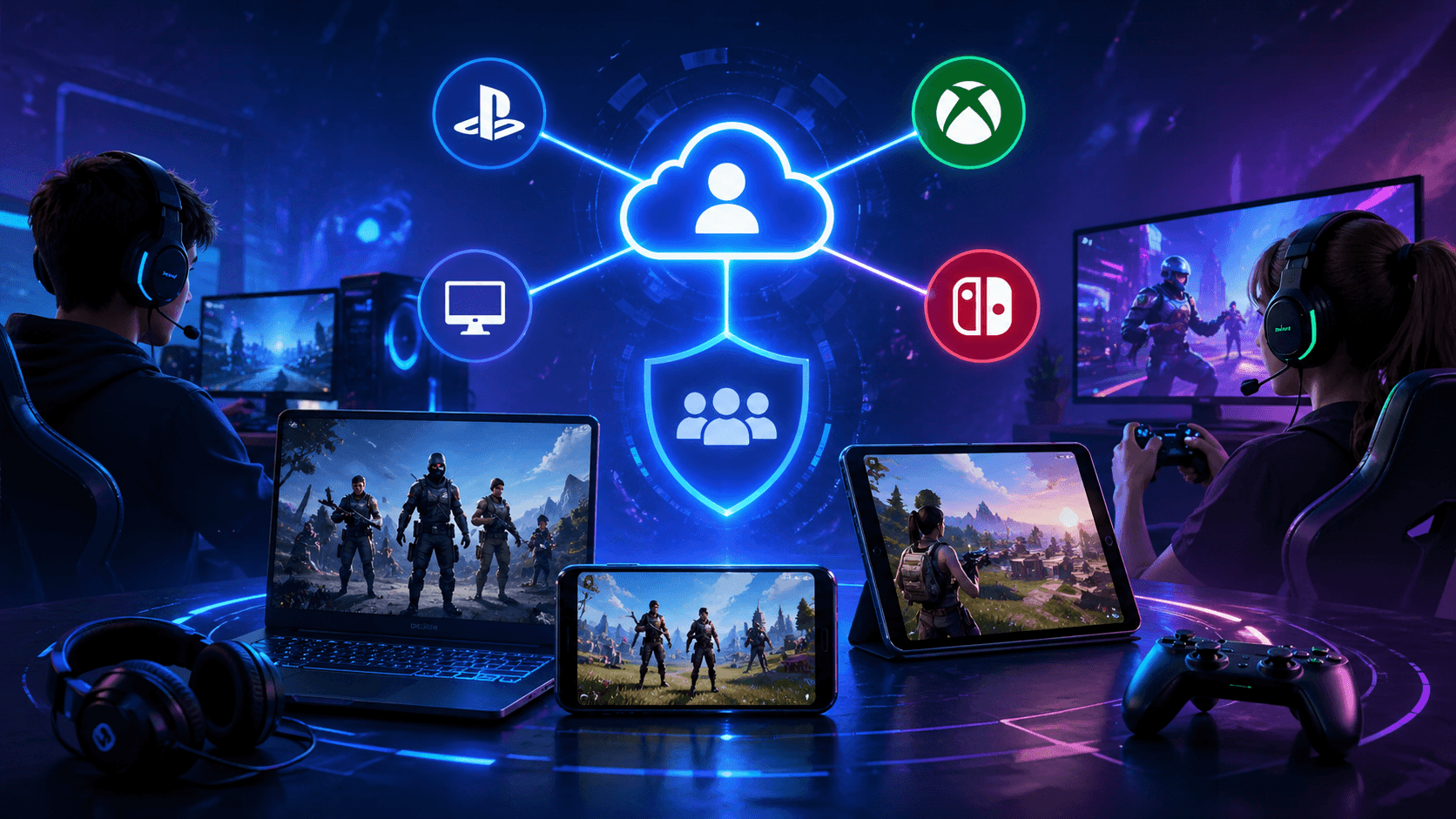
Cross-Platform Gaming Becomes the Industry Standard
Cross-platform gaming is no longer considered a bonus feature—it has become a core expectation in 2026. Players now demand the ability to switch between devices without losing progress, access, or competitive standing.
Gameplay Improvements
This shift is being driven by several major benefits:
Larger matchmaking pools for faster queue times
Ability to play with friends across all platforms
Shared progression systems tied to accounts
Increased player retention across ecosystems
Greater flexibility in how and where people play
Developers are increasingly designing games around unified player accounts rather than platform-specific systems.
The Industry-Wide Transition
Major titles across the industry are adopting cross-platform functionality, recognizing that fragmented player bases are no longer sustainable. Games that fail to adapt risk losing relevance in a highly competitive market.
This transition is also influencing game design, with developers prioritizing scalability and accessibility from the start.
Competitive Gaming Implications
Cross-platform play is reshaping competitive environments. With larger player pools, matchmaking becomes more balanced, and competition becomes more diverse.
This also opens the door for more inclusive esports ecosystems, where players from different platforms can compete on equal footing.
Final Thoughts
Cross-platform gaming represents one of the most important shifts in modern gaming. As technology continues to evolve, seamless connectivity across devices will define the future of multiplayer experiences.
Author:
Jordan Kline
Jordan covers esports culture, gaming news, and how competitive scenes evolve across titles. He writes breakdowns that bridge mainstream gaming trends with the creator-driven world of 1v1Me.

15,000+ Ratings
