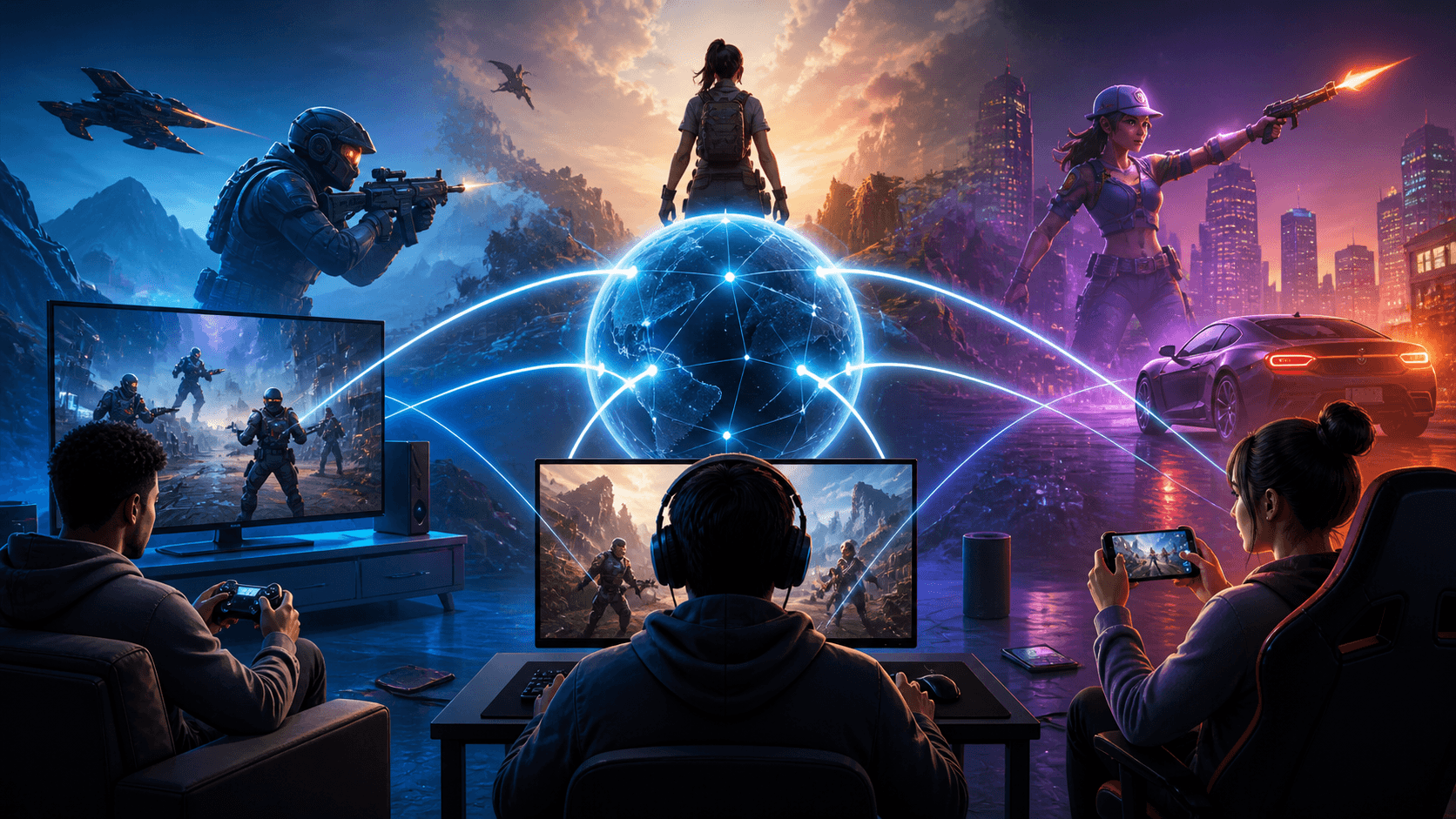
Title: Cross-Platform Gaming Becomes the Standard
Cross-platform gaming is no longer a feature—it is now the foundation of modern gaming. In 2026, developers across the industry are prioritizing seamless connectivity between players on console, PC, and mobile.
Gameplay Improvements
The shift toward cross-platform ecosystems brings several key advantages:
Faster matchmaking due to larger player pools
Shared progression across devices and platforms
Increased accessibility for casual and competitive players
More consistent updates and unified gameplay experiences
Stronger communities built around shared gameplay
These improvements are redefining how games are designed and experienced.
A More Connected Gaming World
Developers are moving away from platform-specific ecosystems and focusing on account-based progression. This means players can switch devices without losing progress, unlocking a more flexible and user-friendly experience.
This shift also reduces fragmentation in the player base, ensuring that games remain active and competitive for longer periods.
Impact on Competitive Gaming
Cross-platform functionality is also reshaping esports. With more players competing in the same ecosystem, the talent pool becomes deeper and more diverse. This leads to better matchmaking, stronger competition, and more exciting tournaments.
For competitive players, this means more opportunities to improve and compete at higher levels regardless of their platform.
Final Thoughts
Cross-platform gaming has officially become the standard, and its impact will continue to grow. As developers refine these systems, players can expect even more seamless and connected experiences.
This trend is not just about convenience—it’s about creating a unified gaming future where everyone can compete on equal footing.
Author:
Jordan Kline
Jordan covers esports culture, gaming news, and how competitive scenes evolve across titles. He writes breakdowns that bridge mainstream gaming trends with the creator-driven world of 1v1Me.

15,000+ Ratings
