Gaming Industry Shifts Toward Live Service Longevity
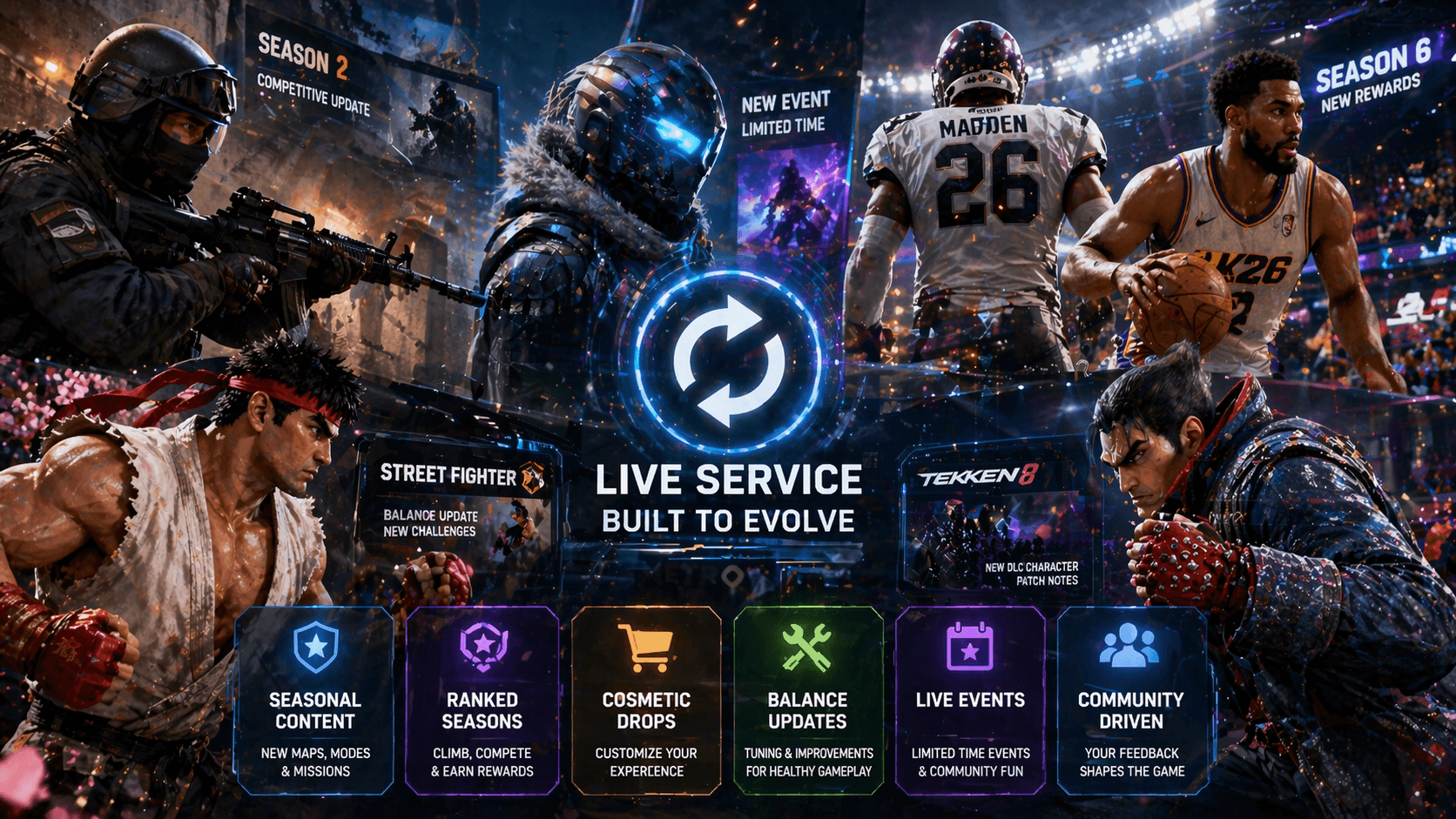
One of the biggest gaming trends visible on April 22, 2026 is the continued shift toward long-term live service support. Across shooters, sports games, fighters, and multiplayer titles, publishers are prioritizing recurring updates over short launch windows.
Instead of relying only on release-day sales, modern games increasingly build value through seasonal content, ranked ladders, cosmetic drops, gameplay tuning, and community events.
Gameplay Improvements
This trend is visible across major genres:
Sports games like Madden 26 and NBA 2K26 are expected to emphasize post-launch updates.
Shooters like Counter-Strike 2 continue evolving through patches and competitive seasons.
Fighters like Tekken 8 and Street Fighter 6 grow through balance updates and DLC characters.
Social multiplayer games use events to keep players returning weekly.
For players, this can be positive when updates improve gameplay and keep communities active. It also means developers are judged over months and years rather than launch week alone.
Why It Matters
Gamers now expect titles to improve after release. A rough start no longer guarantees failure, while strong support can create multi-year success stories.
This also changes how players choose games. Many users now ask: Will this game still matter six months from now?
Final Thoughts
Live service longevity is no longer a side strategy—it is central to modern gaming. In 2026, the games that listen, update, and reward communities are the ones most likely to dominate.
Author:
Jordan Kline
Jordan covers esports culture, gaming news, and how competitive scenes evolve across titles. He writes breakdowns that bridge mainstream gaming trends with the creator-driven world of 1v1Me.

15,000+ Ratings
