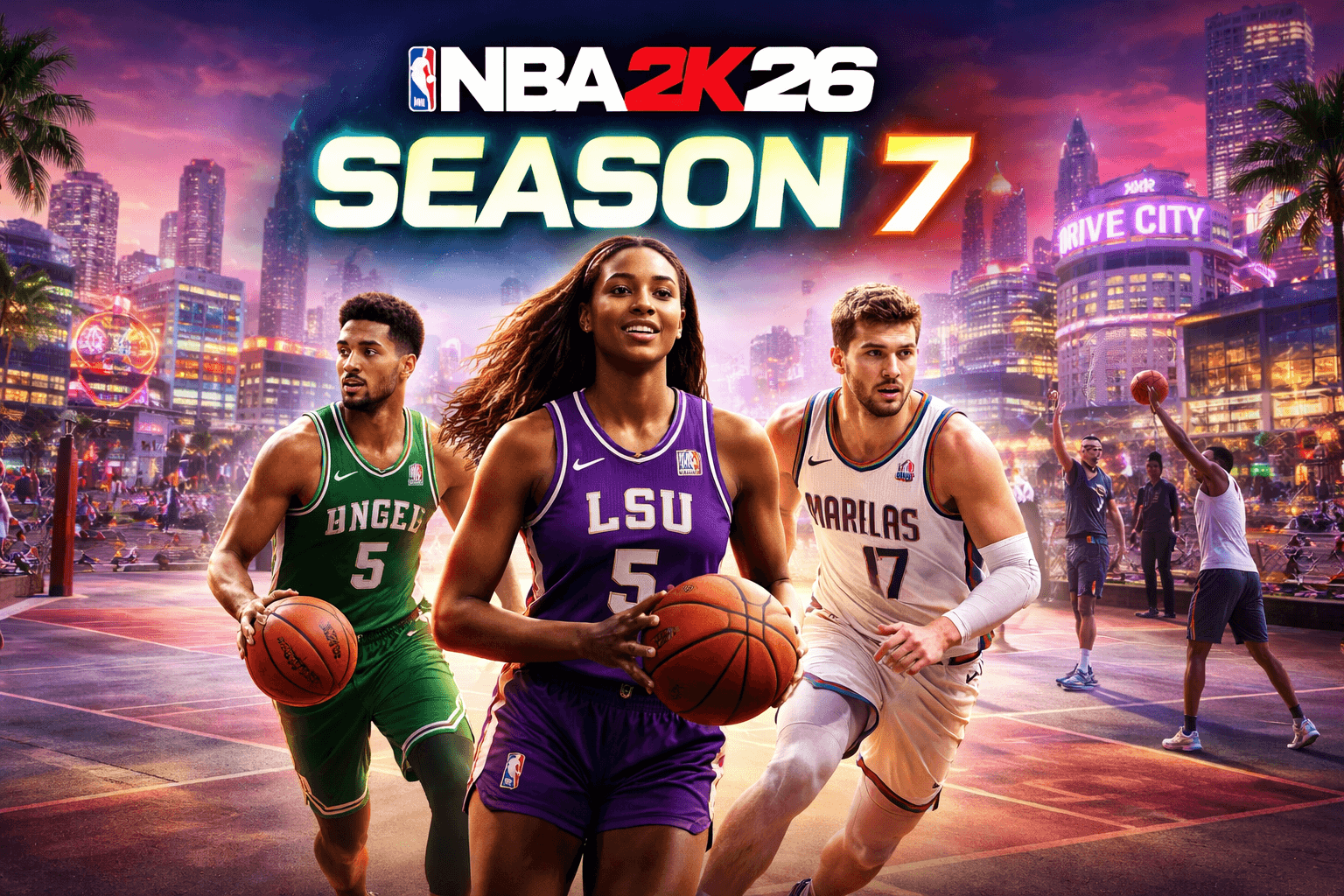
NBA 2K26 Season 7 Pushes Live-Service Momentum Even Further
The launch of NBA 2K26 Season 7 this week represents another major moment for the live-service evolution of sports gaming. While annual sports releases once focused almost entirely on launch-day content, modern titles now depend heavily on seasonal engagement, rotating rewards, and community-driven progression systems.
Season 7 arrives during one of the most important stretches of the real-world basketball calendar, with the NBA playoffs and WNBA regular season helping fuel interest across the entire basketball community. The update introduces new MyCAREER rewards, expanded MyTEAM content, refreshed cosmetics, and the return of Rivet City Park from NBA 2K16, giving longtime fans a heavy dose of nostalgia while still pushing the modern online ecosystem forward.
One of the biggest talking points surrounding the update is the continued blending of real-world basketball culture with in-game progression systems. Angel Reese headlining the season reflects how NBA 2K26 continues positioning itself as more than just a basketball simulator. The game increasingly acts as a digital basketball platform that combines esports, fashion, social systems, and seasonal engagement loops.
Gameplay Improvements
The biggest gameplay conversations surrounding NBA 2K26 continue focusing on movement fluidity and ProPLAY animation systems. Many players believe this year’s gameplay feels smoother and more responsive during isolation situations and transition offense compared to previous entries.
The return of older park environments also shows that Visual Concepts understands the importance of nostalgia-driven content. Bringing back Rivet City Park gives longtime players a reason to reconnect with the online experience while newer players get to experience one of the community’s favorite environments.
The Bigger Trend Behind Sports Gaming
Seasonal content models are becoming essential across sports titles. NBA 2K26, EA FC 26, and Madden 26 are all leaning heavily into battle-pass style progression systems that keep players active throughout the year instead of only during launch season.
That shift changes how publishers approach content development. Instead of building toward one massive launch, developers now operate on near-constant update cycles designed to maximize engagement month after month.
For competitive players, that means more rewards, more events, and more content updates. For casual fans, however, it also increases concerns surrounding grinding, monetization, and player fatigue.
Community Reaction
The NBA 2K community remains deeply divided on the direction of the franchise. Many players appreciate the improved presentation quality and content cadence, while others continue criticizing microtransactions and progression balancing.
Still, NBA 2K26 remains one of the most consistently played sports games in the industry, and Season 7 proves that 2K’s live-service strategy continues driving engagement during the late stages of the game’s lifecycle.
Final Thoughts
NBA 2K26 Season 7 is another reminder that sports games are no longer static yearly releases. They are evolving into constantly updated ecosystems built around seasonal engagement, competitive progression, and community retention.
Whether players fully embrace that model or continue pushing back against monetization concerns, one thing is clear: live-service sports gaming is not slowing down anytime soon.
Author:
Marcus Reed
Marcus is a 2K rec veteran who tracks the competitive scene and the weekly meta. He is also a massive Street Fighter lover and keeps up with the scene. He breaks down playstyles, builds, and matchup advantages in a way casual fans can actually use.

15,000+ Ratings
