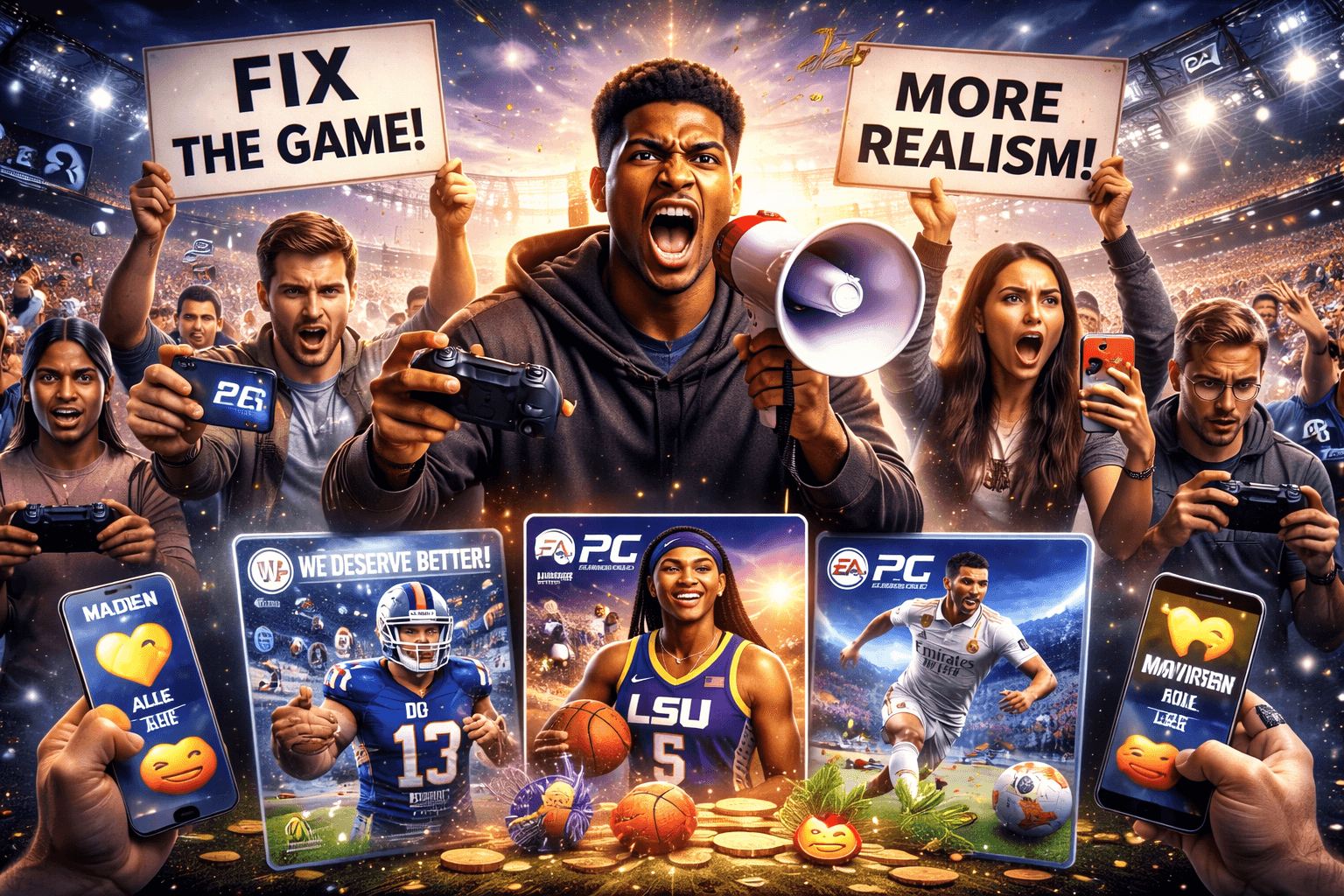
Sports Gaming Communities Are Becoming More Vocal in 2026
One of the biggest gaming trends of 2026 is not tied to graphics technology or hardware upgrades.
Instead, it revolves around something far more important: player expectations.
Across Reddit, forums, YouTube, and social media, sports gaming communities are becoming significantly more vocal about what they want from modern franchises like Madden 26, NBA 2K26, and EA FC 26.
That growing frustration is shaping the conversation around sports gaming more than ever before.
Players Want More Than Roster Updates
For years, sports franchises operated under a fairly predictable structure.
Each yearly release introduced updated rosters, refreshed visuals, and a handful of gameplay tweaks. That formula worked for a long time because sports games faced limited competition.
But modern players expect far more.
Communities are now demanding:
More intelligent AI
Better franchise depth
Improved online infrastructure
Faster gameplay responsiveness
Less aggressive monetization
Greater gameplay realism
Those requests appear consistently across nearly every major sports title.
Madden players continue asking for deeper franchise systems and improved gameplay consistency. NBA 2K fans regularly criticize progression systems and microtransactions. EA FC communities remain divided over Ultimate Team balancing and gameplay pacing.
The pattern is becoming impossible for publishers to ignore.
Nostalgia Is Becoming a Major Industry Force
An interesting trend appearing throughout sports gaming discussions is nostalgia for older titles.
Many players continue revisiting classics like NBA 2K16, older Madden games, and legacy sports franchises because they believe those titles focused more heavily on gameplay innovation and less on monetization systems.
That nostalgia helps explain why remastered environments, classic modes, and throwback content are becoming increasingly common throughout modern sports games.
Publishers recognize that longtime fans want experiences that feel authentic rather than overly commercialized.
The return of Rivet City in NBA 2K26 Season 7 is one example of how companies are responding to that demand.
Live-Service Models Continue Dominating
Despite criticism, live-service structures are not disappearing.
In fact, sports games are becoming even more dependent on them.
Seasonal battle passes, rotating rewards, timed events, and ongoing content updates now define how major franchises operate. Publishers rely heavily on keeping players engaged year-round instead of focusing solely on launch windows.
That strategy generates enormous revenue, but it also creates pressure to constantly deliver fresh content.
Communities now expect regular updates, meaningful balancing improvements, and transparent communication from developers.
When those expectations are not met, backlash spreads quickly online.
The Future of Sports Gaming Depends on Innovation
The biggest challenge facing sports publishers in 2026 is simple: communities want evolution, not maintenance.
Visual improvements alone are no longer enough.
Players want smarter systems, deeper customization, stronger competitive integrity, and gameplay that genuinely feels different year to year.
The companies that successfully balance innovation, monetization, and community trust will likely define the next era of sports gaming.
Those that fail risk becoming increasingly disconnected from their audiences.
Final Thoughts
Sports gaming communities are more engaged, vocal, and demanding than ever before.
Whether discussing Madden 26, NBA 2K26, or EA FC 26, players are pushing publishers toward deeper gameplay systems, stronger online experiences, and more meaningful yearly improvements.
That pressure is reshaping the industry in real time.
The next generation of sports games will not succeed purely because of licenses or graphics. They will succeed based on whether players believe developers are truly listening to what the community wants.
Author:
Jordan Kline
Jordan covers esports culture, gaming news, and how competitive scenes evolve across titles. He writes breakdowns that bridge mainstream gaming trends with the creator-driven world of 1v1Me.

15,000+ Ratings
